Ceramic coating vs. paint correction: which does your car need first?
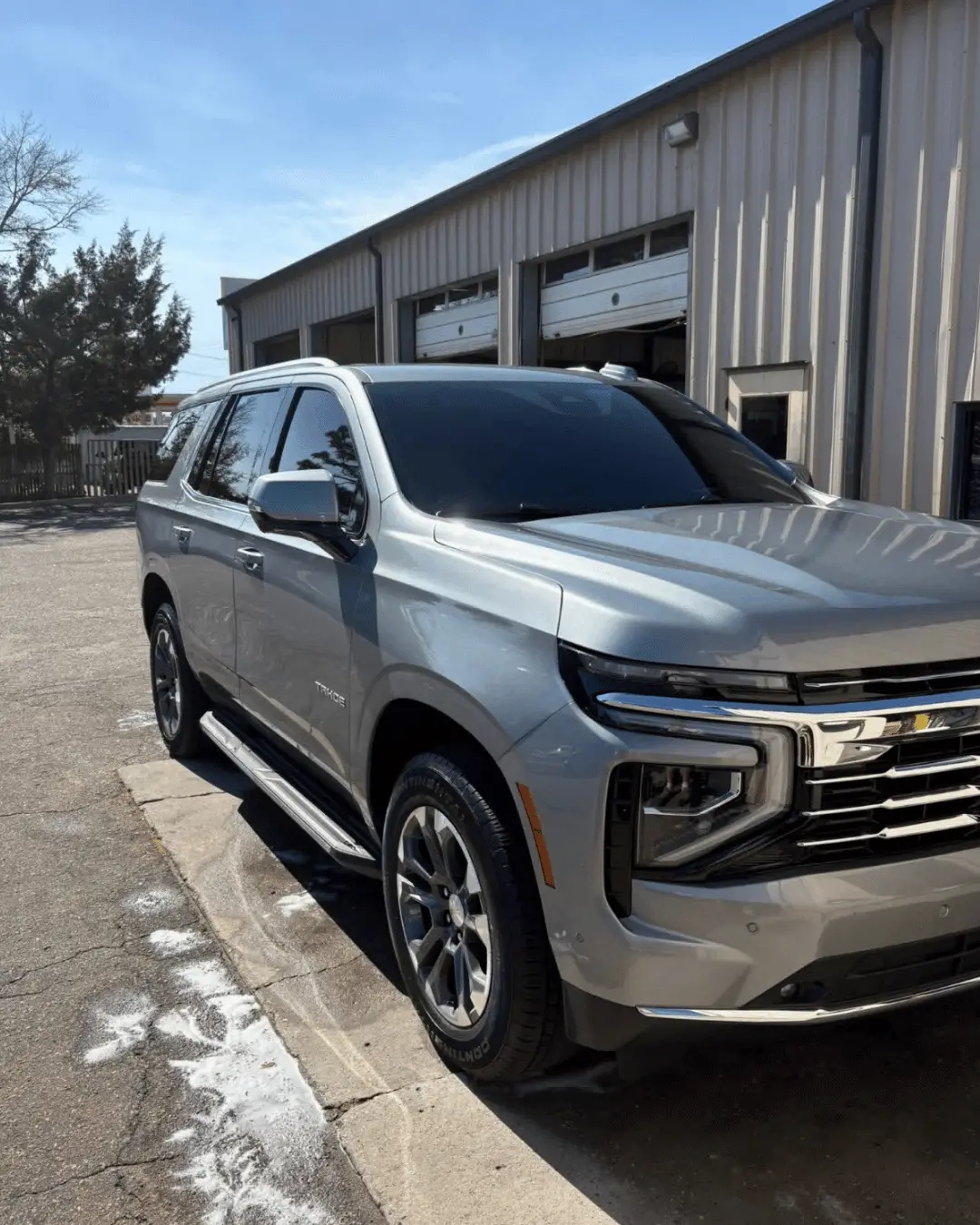
Paint correction fixes damage that’s already there: swirl marks, haze, and light scratches. A ceramic coating protects the paint from new damage. If you can see swirls in direct sun, correct first and coat second. If the paint is new or already clean, go straight to the coating.
What’s the difference between them?
They do opposite jobs.
- Paint correction is machine polishing. It levels the top of the clear coat so swirls and light scratches disappear and the paint reflects clearly again.
- A ceramic coating is a hard, slick layer that bonds on top of the clear coat. Salt, pollen, and grime sit on the coating instead of the paint, so they rinse off.
Correction changes how the paint looks today. A coating changes how it holds up from here on.
How do you tell which one your car needs?
Two quick tests:
- The sunlight test. Pull the car into direct sun and look at a dark panel at an angle. Fine circular scratches around the light’s reflection are swirl marks. If you see them, the paint needs correction before a coating.
- The fingernail test. Run a fingernail gently across a scratch. If it catches, the scratch is too deep for polishing and needs paint or body work.
No swirls in the sun? The paint is ready for a coating. Every coating we do includes polish prep, which handles light haze, so lightly worn paint doesn’t need a separate correction.
Why does the order matter at the beach?
A coating locks in whatever is underneath it. Coat swirled paint and you’ve protected the swirls.
That matters more on the Grand Strand because the coast keeps adding damage. Salt spray speeds up corrosion for miles inland (source), pine pollen gets wiped off dry every spring, and summer heat bakes bug splatter into the clear coat. Paint that gets corrected and left bare starts picking up new swirls right away. Paint that gets corrected and coated stays corrected.
The usual order:
- Wash and decontaminate
- Correct the paint, if it needs it
- Coat it
- Keep it washed on a schedule
What do they cost?
| Service | Price | Time |
|---|---|---|
| Paint correction | From $200 | 2 to 6 hours |
| Ceramic coating | From $525 | 2 to 8 hours |
Paint correction is priced by how much your paint needs, so we look at it before we start. Ceramic coatings come in 6-month, 2-year, and 5-year tiers, with prep included and one price for any passenger vehicle. Every tier is on our pricing page.
The coating’s touch-up warranty runs the full term on a maintenance plan and 6 months without one. Drive-thru washes void it.
Should you book them together?
If your car needs both, yes. Booking them together means the corrected paint gets coated before it picks up a single new swirl. Plan on the correction time plus the coating time. A heavily swirled 3-row SUV getting a 5-year coating can take most of a day. That makes it a good job for drop-off at our base, or pickup and drop-off anywhere in Horry County.
If you’re not sure the paint needs correction at all, start with the coating. We look at the paint during prep and tell you before we start if correction would make a visible difference.
When can you skip paint correction?
You can go straight to a coating when:
- The car is new. Fresh paint rarely needs correction, and coating it early protects it from day one.
- The paint passes the sunlight test. Polish prep handles light haze.
- You only want protection, not perfection. A coating still beats bare paint, even with a few swirls under it.
And you can skip the coating, for now, when the car lives in a garage and rarely sees the coast. Correction alone will look great until the next bad wash.
When should you call a pro?
DIY polishers are easy to buy and easy to misuse. Too much pressure or the wrong pad can burn through clear coat, and that means a repaint. Call a professional when:
- The paint is dark and heavily swirled
- You want a multi-year coating
- You’re not sure whether a scratch is too deep
We’ll tell you before we start if a scratch needs body work instead of polishing.
The short answer
Correction fixes, coating protects. Swirled paint gets both, in that order. New or clean paint goes straight to a coating. Not sure? Book an exterior detail and we’ll look at the paint with you, or call or text 843-894-3313.